
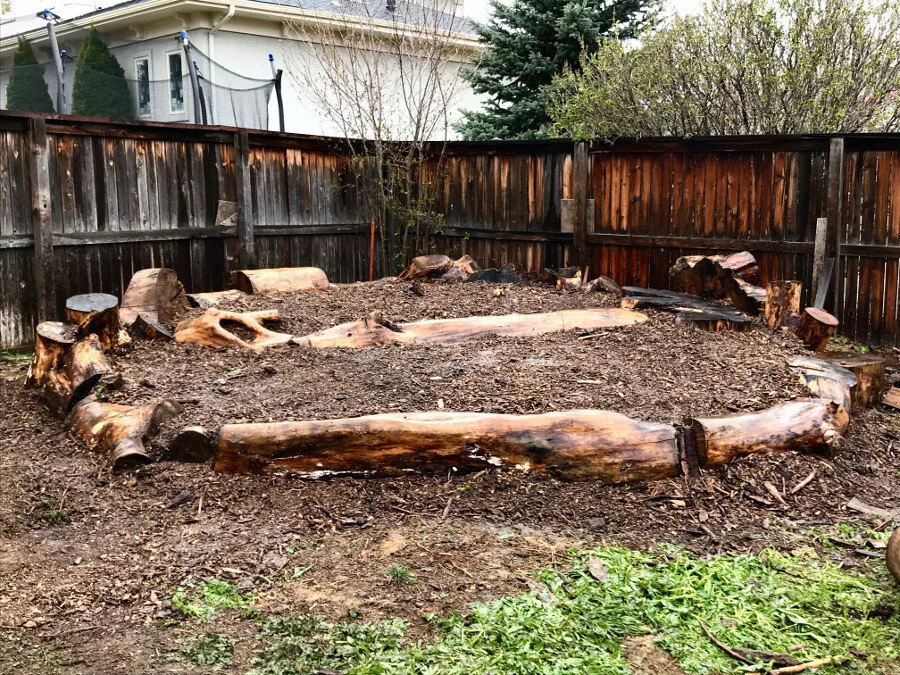
When we build a regenerative garden bed, we are initiating a living process. Whether you’ve hired us to build the foundation or to help you maintain a maturing landscape, the garden is a dynamic system that changes with every season.
To ensure that you are happy looking at your garden in the coming months and that your garden thrives, let’s make sure you understand your role as a steward of the land.
Your Garden: A Dynamic Process
A regenerative garden is not a static object; it is an evolving ecosystem. In the early stages, you may notice persistent “pioneer” plants, like wild morning glory, appearing in your mulch. Wild morning glory has frustrated many gardeners before. Remember, a weed is a plant the gardener simply does not want. They give it nicknames like “bindweed” and “devils guts.” The Reinhabit gardeners are re-framing how they speak, carefully cultivating a positive relationship with the whole picture! We are tending not only the space in that moment, but the space over time! Let’s do it with a positive attitude, cultivating a harmonious attitude towards the plants we see. Here are some perspectives of how we do this:
- Reframing the “Battle”: Instead of seeing bindweed as an enemy to be battled, view it as an early-succession ally. Bindweed acts as a natural tiller, aerating the soil and signaling that the landscape is beginning to diversify its bacterial composition.
- The Steward’s Strategy: We don’t let them multiply, but we can use their work to our advantage. We wait for them to form a mat or flower, then pull them up! This process loosens the soil perfectly for your intentional plantings. Plus, it’s just as easy if not more to pull a mat of them out than individual sprouts!
- Cover Bare Ground: While we may utilize drip irrigation on timers for establishment, our ultimate goal is a landscape dominated by drought-tolerant perennials and self-seeding annuals that can thrive within the natural rhythm of our local environment.
- Speeding Up Succession: You can proactively replace bare soil with desirable groundcovers like tri-color clover, yarrow, sorrel, or purslane. By filling those niches quickly, you prevent bindweed from reclaiming the space and help your resilient system take hold.
- The Patience Phase: We prioritize planting smaller, more affordable perennial starts (often around $5) because they establish deeper, more resilient root systems than larger, nursery-grown plants. At wholesale prices, a mature plant can easily cost $20 or more compared to our $5 starts. These smaller plants may also build stronger roots and are better adjusted in the long run!
Stewardship is an Attitude of Love
The most successful LSI gardens are those tended with love. Enjoy being in the garden! Putter around. Move away from a chore-based mindset and toward an active stewardship role. Enjoy the benefits of the early morning and late evening sunshine, and getting grounded in your garden.
Your garden is a reflection of the care you put into it. Whether you are “chop-and-dropping” mulch, or gently guiding the succession of plants, you are building a microbially alive system that will eventually provide beauty, food, and pollinator support for years to come.